

Happy Wan
Happy Wan turns text, images, clips, and audio into videos up to 30 seconds, with @ tag references to keep characters consistent across shots.
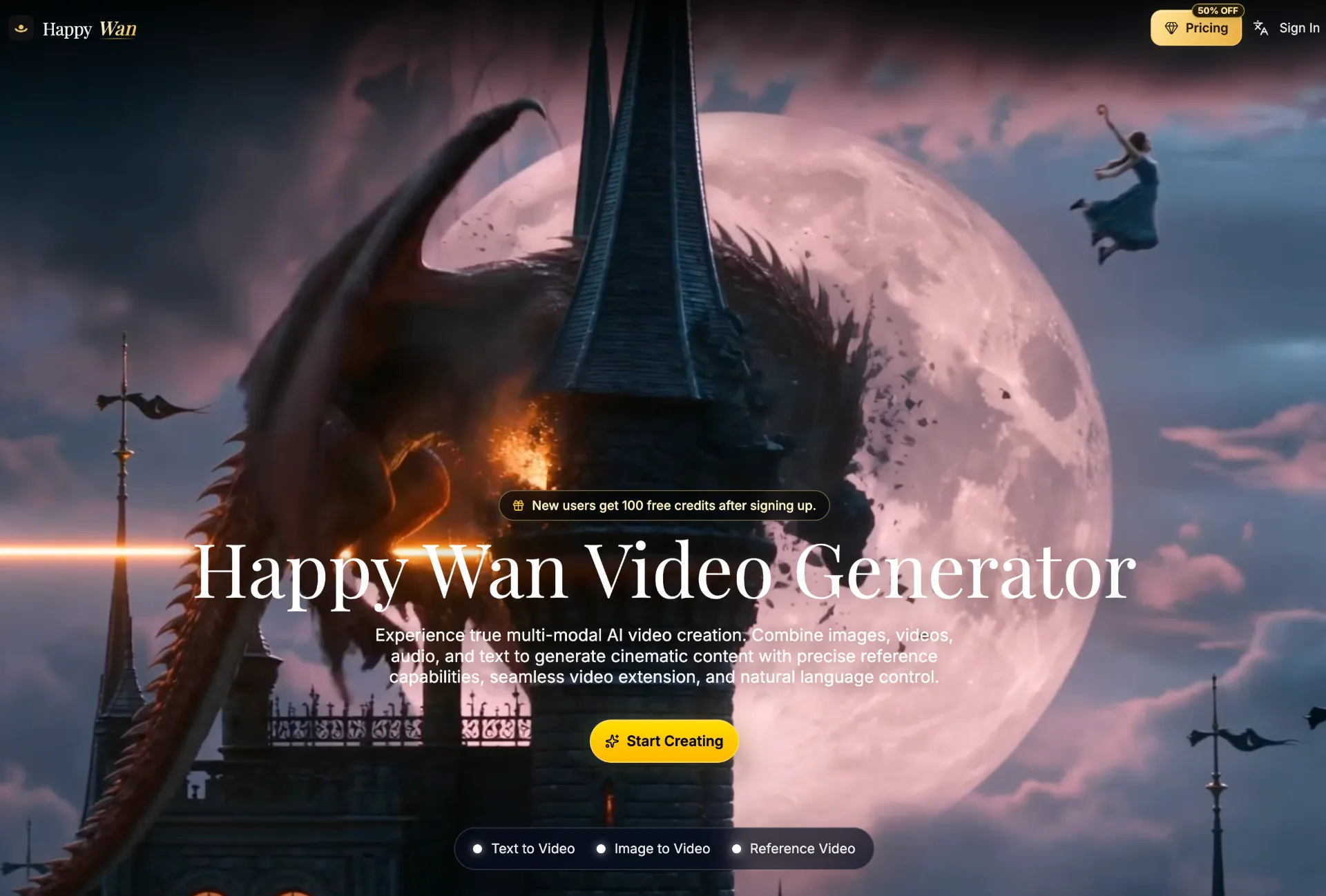
TL;DR: Happy Wan is a browser-based AI video generator that builds clips of up to 30 seconds from text prompts, reference images, existing video, and optional audio. It cuts down the slow work of storyboarding, shooting, and re-shooting concept footage, and its @ tag reference system keeps characters and settings consistent from shot to shot. It suits marketers, editors, and designers who need quick motion concepts and social clips, not finished feature-length footage.
What is Happy Wan & How Does It Work?
Happy Wan is a web-based video generation workspace with three main modes: Text to Video, Image to Video, and Reference Video. You write a prompt (up to 20,000 characters), choose a resolution of 480p, 720p, or 1080p in the generator, set the aspect ratio and duration, and decide whether to include audio. The default Happy Wan model generates clips of up to 30 seconds at 20 credits per second, and the estimated cost appears before you click Generate. A batch option produces up to four variations of the same prompt and settings at once, which is useful when you want to compare takes rather than re-roll one at a time.
The main difference from a basic text-to-video tool is the reference system. You tag uploaded assets inside your prompt with @Image and @Video, so the model knows which face, product, or camera move to follow. You can also set a first and last frame, extend an existing scene, or insert a new shot while keeping the same characters and environment. Beyond its own model, the site also lists third-party video models (Seedance and MiniMax variants) and image models (GPT Image, Seedream, Nano Banana). The footer notes that Happy Wan is an independent platform with no affiliation to any underlying model provider, so it works best to think of it as a front end for several AI models plus its own reference-driven workflow.
4 Core Use Cases & Practical Scenarios
- Social ad variations for a product launch: A content marketer needs five short vertical clips featuring the same product for a paid social test. They upload a clean product photo, tag it as @Image in a prompt describing the setting and camera move, and use batch generation to get four variations per run. Instead of booking a shoot, they end up with a set of usable test clips in one session and can drop the weak ones before spending on ads.
- Previsualization for a short film or commercial: A director wants to check whether a tracking shot through a crowded market works before committing a crew to it. They describe the move in the prompt, set the first and last frames from location stills, and generate a one-take sequence. That gives them a rough animatic to share with the producer and DP, which replaces hours of hand-drawn boards or 3D blocking.
- Animating static brand illustrations: A designer has a set of flat illustrations for a campaign and wants subtle motion for a landing page header. They use Image to Video, write prompts focused on restrained movement (drifting clouds, a slow push-in), and generate 5-second loops at a lower resolution first to check the motion. Once a direction works, they re-render at 1080p, turning a static asset into a motion piece without opening After Effects.
- Extending an existing clip into a longer sequence: An editor has a strong 5-second generation but needs 15 seconds for a story beat. They use the scene extension and shot insertion tools to continue the action while keeping the character's look and the lighting consistent. This avoids regenerating from scratch and losing a take that already works.
Getting Started: Step-by-Step Workflow
- Sign up and claim the free credits. New accounts get 100 credits, which is enough for one 5-second, 480p clip from a text prompt.
- Pick a mode and gather your references. Choose Text to Video, Image to Video, or Reference Video, then upload any product shots, character images, or sample clips you want the model to follow.
- Write a tagged prompt and set the parameters. Describe the subject, action, camera movement, and style, referencing uploads with @Image or @Video. Then choose resolution, aspect ratio, duration, audio, and batch count, and check the estimated credit cost.
- Generate, review, and refine. Compare the outputs in My Creations, keep the best take, and then extend it, insert shots, or re-render at a higher resolution once the motion and framing look right.
Happy Wan Pros & Cons: An Honest Look
Pros:
- Reference tagging for consistency: Keeping a character or product looking the same across shots is one of the hardest parts of AI video, and @ tags give you direct control over it. For brand work, where a logo or face has to look the same in every cut, this matters more than raw visual quality.
- Transparent per-second costing: The generator shows the credit cost before you render, and the rate of 20 credits per second makes budgets easy to work out. You can plan a campaign's spend in advance instead of finding out after the fact.
- Multiple models in one account: Besides the Happy Wan model, the site lists Seedance, MiniMax, and several image models under one login. That cuts down on juggling separate subscriptions when you want to compare outputs.
Cons:
- Credits go fast at higher settings: At 20 credits per second, even the largest monthly plan covers a limited amount of footage, and iterating on one complex shot can use up a noticeable share of your allowance. Heavy users producing long sequences daily may find this frustrating.
- Limited transparency and integrations: The site doesn't say which underlying model powers the default Happy Wan option, and it lists no NLE plugins, API, or team collaboration features. Studios that need predictable model versions or pipeline integration should check these details first.
Who Should Use Happy Wan (And Who Shouldn't)?
- Best For: Social and performance marketers who need many short, on-brand variations for testing, and filmmakers or editors who want fast previs of camera moves and multi-shot continuity before a real shoot.
- Skip If: You need long-form footage or frame-accurate editing inside Premiere or DaVinci Resolve, or you need a vendor with documented model provenance and enterprise compliance terms. A tool built around a first-party model with a published API may suit you better.
Happy Wan vs. Top Alternatives
| Feature | Happy Wan | Runway | Kling AI |
|---|---|---|---|
| Primary Focus | Reference-driven multimodal generation with access to several models | Generative video plus editing tools in a creative suite | High-motion, realistic video from its own model |
| Ease of Use | Simple generator with presets; @ tags take some practice | Polished interface, broader feature set to learn | Straightforward prompt and image workflow |
| Pricing Model | Credit-based subscriptions plus one-time credit packs | Credit-based subscription tiers | Credit-based tiers |
| Best For | Marketers and previs work that needs consistent characters | Creative teams wanting generation and editing in one place | Creators prioritizing realistic motion |
Happy Wan's strengths are reference control and having several models under one account, while Runway offers a more established editing ecosystem. If you mainly care about the output of one specific model, it can make sense to compare going straight to that provider.
Happy Wan Pricing & Value for Money
The pricing page lists three subscription tiers, with a "50% OFF" promotion running at the time of review. Billed annually, Basic costs $24.99/month ($299.90/year) for 2,500 monthly credits, 1080p output, and sound effects. Plus costs $29.95/month ($359.40/year) for 6,000 credits, 4K output, and priority processing. Pro costs $107.58/month ($1,290.90/year) for 15,000 credits, the fastest processing, priority support, and, on the yearly plan only, unlimited 1K images with Nano Banana 2 and GPT Image 2. One-time credit packs are also offered, but their prices weren't shown on the page.
At 20 credits per second, Basic covers about 125 seconds of footage a month, Plus about 300 seconds, and Pro about 750 seconds, assuming the base rate. Higher resolutions or other models may cost more per second. Plus is the best value for most independent creators, since it costs only slightly more than Basic for more than double the credits. Promotional prices can change, so confirm the current rates and the refund policy before committing to an annual plan.
Happy Wan Frequently Asked Questions (FAQ)
1. Is Happy Wan free to use, or is there a free trial?
Happy Wan is not free. New users get 100 credits after signing up, which covers roughly one 5-second, 480p video from a text prompt. After that, you need a paid subscription or a one-time credit pack.
2. How does Happy Wan compare to Runway?
Happy Wan focuses on reference-driven generation with @ tags and gives access to several third-party video models in one account. Runway is a more established creative suite with broader editing tools built around its own models. Choose Happy Wan for consistent characters and model variety, and Runway for a more complete production environment.
3. Is Happy Wan suitable for beginners?
Yes. Basic text-to-video only needs a prompt plus a few dropdown settings, and the cost estimate shows up before you generate. The @ tag reference system and scene extension tools take some practice, so beginners should start with short, low-resolution tests before spending credits on longer clips.
4. What are the best alternatives to Happy Wan?
Common alternatives include Runway, Kling AI, Pika, and Luma Dream Machine, each with its own model and credit system. If a specific model listed on Happy Wan is what you really want, check that model's official platform too. The right pick depends on whether you value editing tools, motion realism, or multi-model access most.
让更多人发现你的产品。
提交到 Submito发现更多产品
Tavoa AI
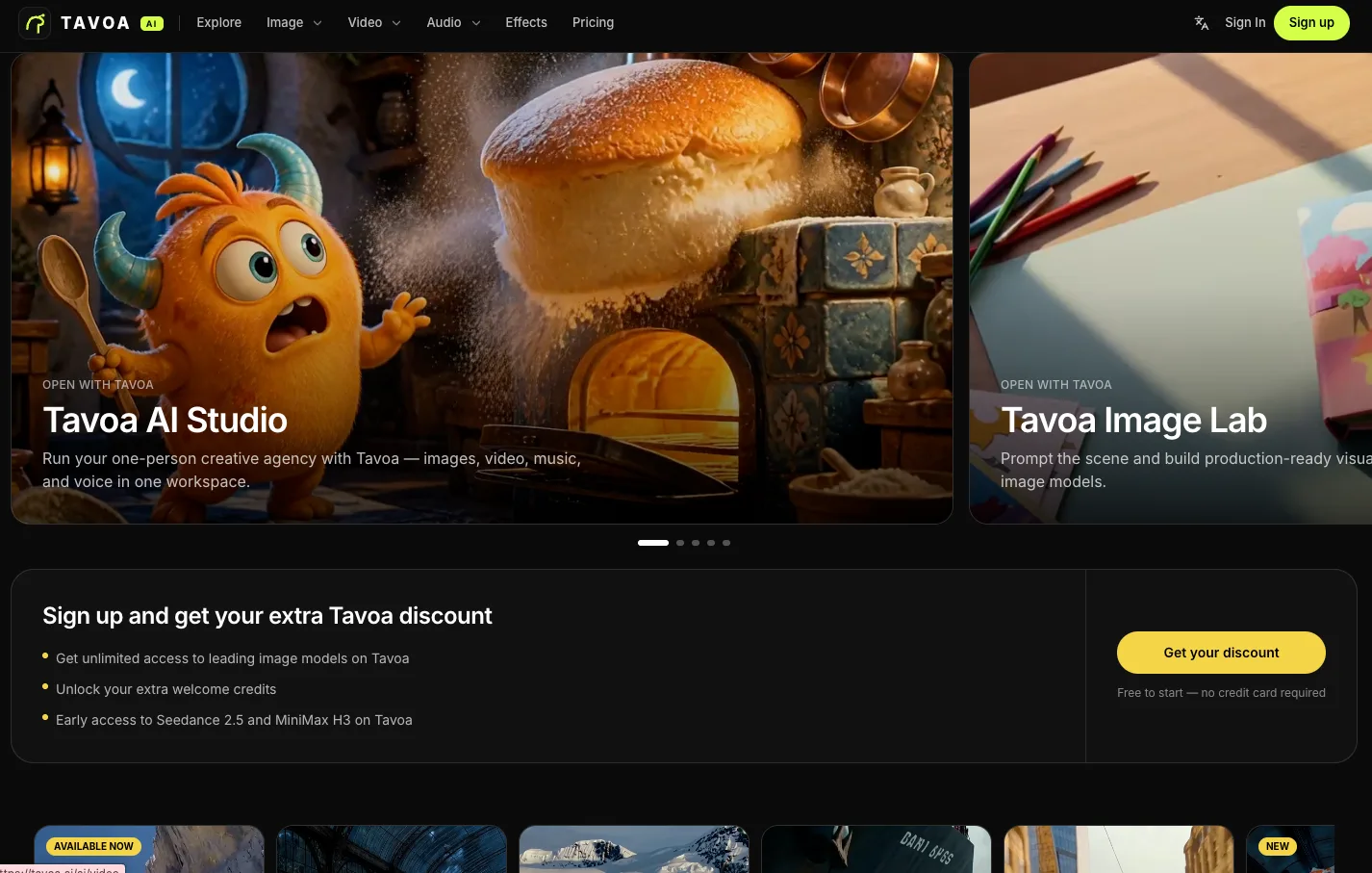
Tavoa AI brings Seedance, Kling, Veo, and other video and image models into one credit-based workspace, so creators can test outputs without juggling apps.
AI Attractiveness Test
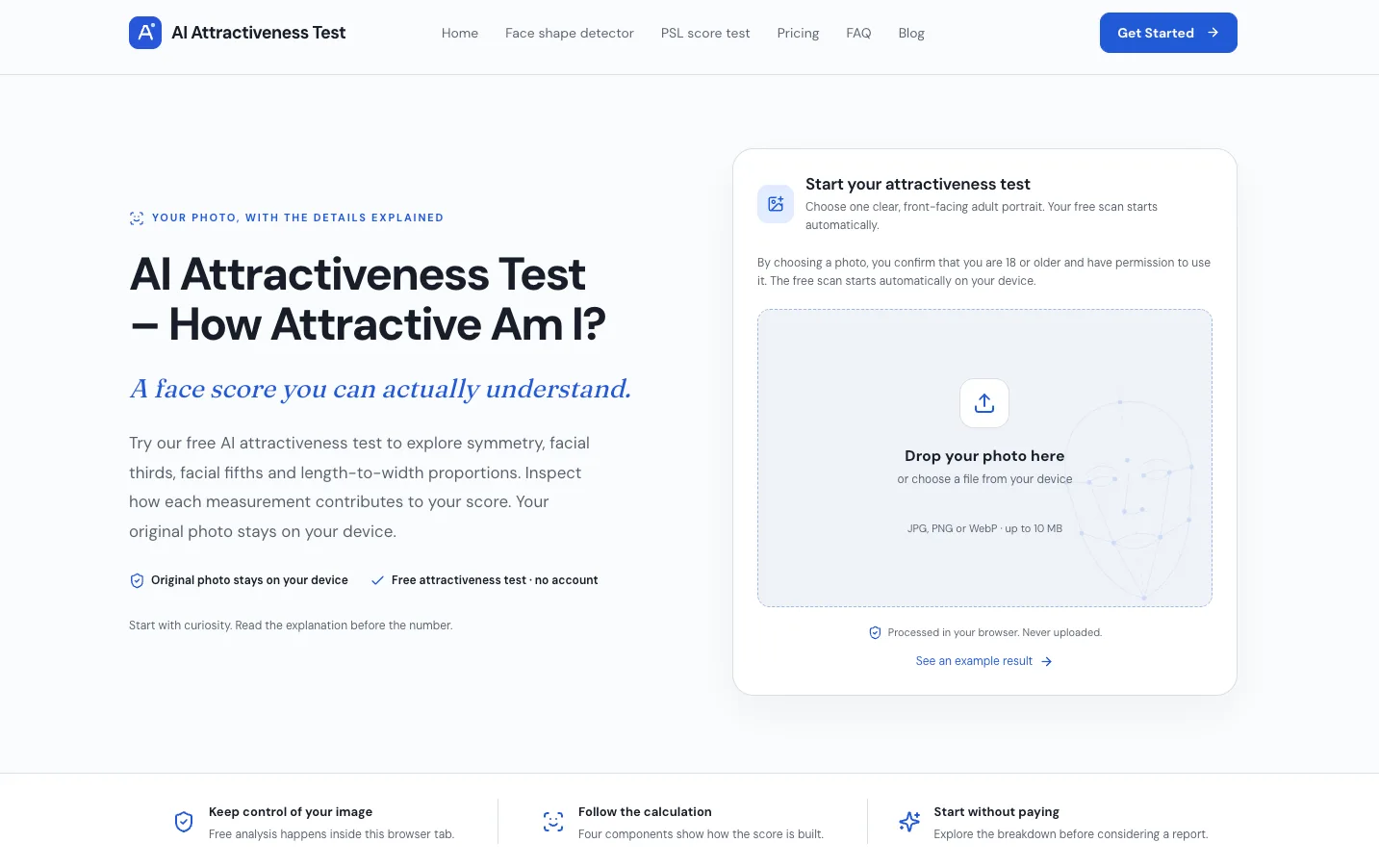
Analyze facial symmetry, thirds, fifths, and proportions directly in your browser. Your photo stays on your device with a transparent 0–100 harmony breakdown.
Viral Video AI
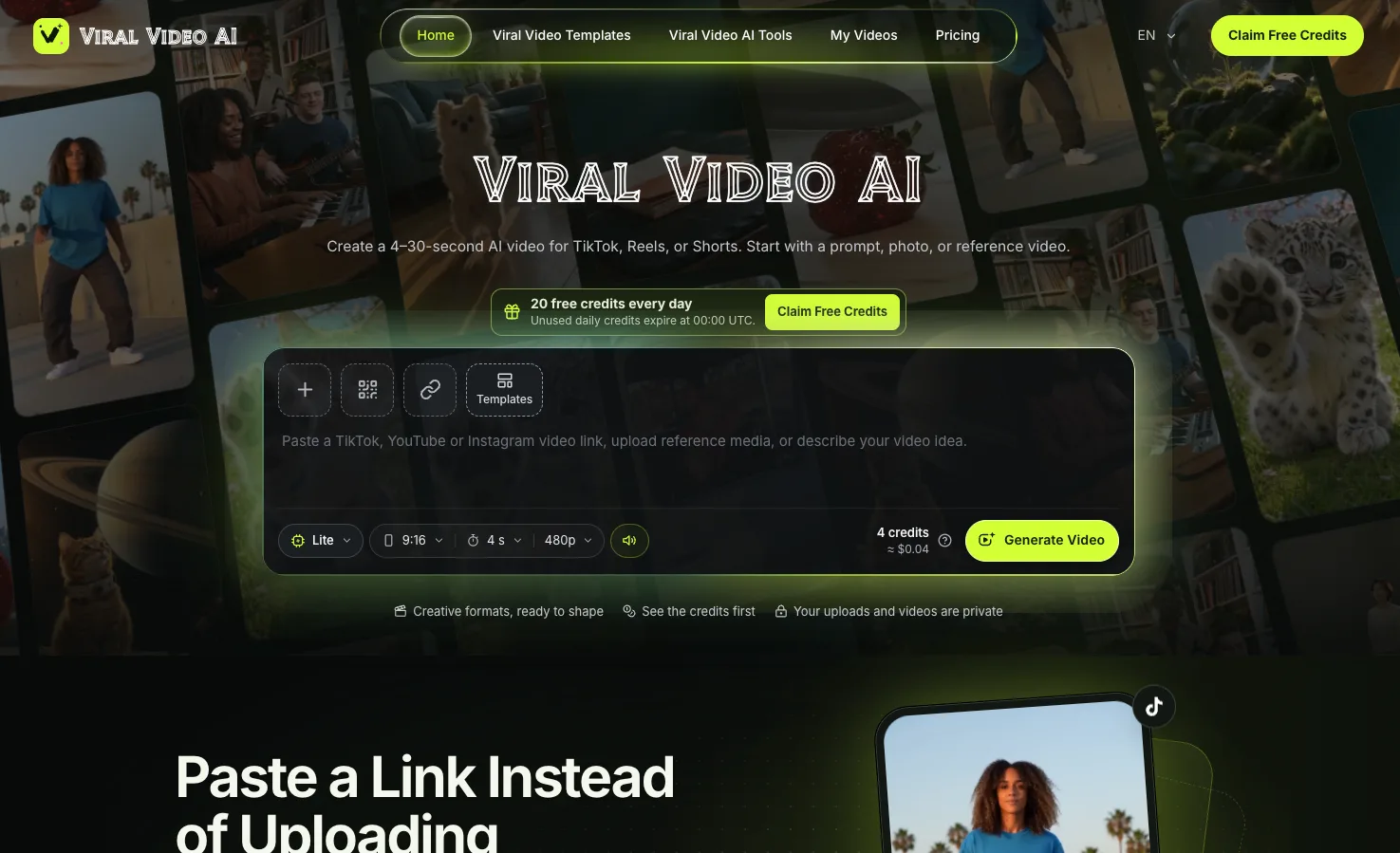
Viral Video AI helps creators, social media teams and small businesses make short videos for TikTok, Instagram Reels and YouTube Shorts. Paste a public TikTok, YouTube or Instagram video link, preview it as a reference and describe your own take. You can skip manually downloading and re-uploading the clip. Pick a trending template and add your photo, or start with a text prompt, photos or a reference video. Check the credit estimate before generating, then preview and download the result. Basic supports clips up to 15 seconds. Pro supports clips up to 30 seconds and resolutions up to 1080p. Template settings vary.