

The 7 Deadly Sins Test
Explore the 7 Deadly Sins Test: 21 everyday scenarios, 0–100 scores across seven traits, optional paid reports, and what to expect before you start.
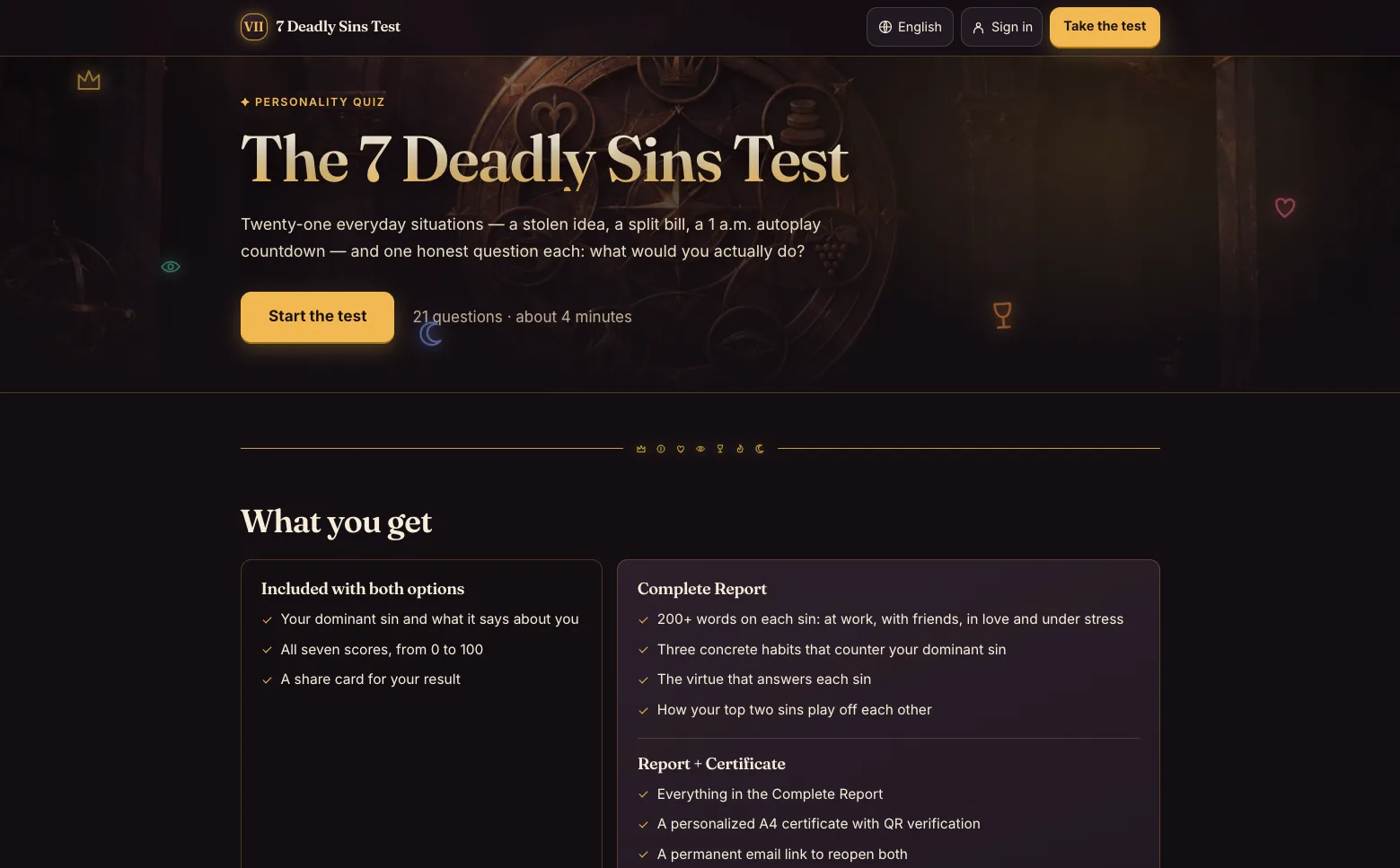
What is 7 Deadly Sins Test
7 Deadly Sins Test is an interactive personality quiz built around 21 everyday situations—such as a stolen idea, a split bill, or a 1 a.m. autoplay countdown—asking how you would actually respond. Rather than treating the seven deadly sins as a religious lecture, it uses them as a practical lens for self-reflection and everyday habits.
Designed for entertainment and personal insight rather than clinical or psychological assessment, the quiz evaluates your tendencies across pride, greed, lust, envy, gluttony, wrath, and sloth. Each sin receives a score from 0 to 100 alongside your dominant trait.
How to use 7 Deadly Sins Test
- Choose your language and start the quiz: Pick your preferred interface language (such as English or one of the 14 other supported languages) and click Start the test or Take the test to begin without creating an account first.
- Answer 21 situational prompts: Work through the 21 questions presented one per screen, selecting how you would realistically act in each scenario.
- Review or adjust earlier answers: Move back and change any previous response while taking the quiz if you want to refine how accurately it reflects your habits.
- Unlock your report and sharing options: Complete the quiz to access your results after payment, where you can view your dominant sin, 0–100 scores across all seven sins, a share card, and optional deeper report or certificate tiers.
7 Deadly Sins Test's use cases
- Quick self-reflection on daily habits: Useful when you want a structured, four-minute check-in on how you react to everyday friction like group bills, late-night habits, or competitive moments.
- Spotting a specific tendency first: Helpful if you already suspect a particular pattern and want to try a focused seven-question single-sin test such as The Pride Test, The Greed Test, or The Sloth Test.
- Exploring context-specific behavior: Relevant if you want to read how each sin shows up at work, with friends, in love, and under stress, or see how your top two sins interact in the Complete Report.
- Casual sharing and keepsakes: Fits users who want a shareable result card or a personalized A4 certificate with QR verification and a permanent email link to reopen their report and certificate.
Benefits of 7 Deadly Sins Test
- Concrete, relatable prompts: Grounding questions in everyday situations makes it easier to answer honestly compared with abstract personality statements.
- Transparent 0–100 scoring: Points from each answer map to one or two sins and scale from 0 to 100 against the maximum possible score for that sin, with the same answers consistently producing the same result.
- Privacy-minded result sharing: Your individual answers are not placed inside a link; only the seven scores are saved under a short random code when sharing results, while users are advised to keep private access links secure.
- Multi-language accessibility: Available across 15 languages, making the quiz and single-sin tests accessible beyond English-speaking audiences.
Pros of 7 Deadly Sins Test
- Fast, low-friction start: Takes about four minutes across 21 single-screen questions, allows going back to edit answers, and lets you answer questions before creating an account.
- Secular, non-judgmental framing: Draws on the historical concept of the seven deadly sins (shaped around 590 under Pope Gregory the Great from Evagrius Ponticus's eight "evil thoughts") without requiring religious belief or offering lectures.
- Layered depth options: Offers core overview items alongside a Complete Report (200+ words per sin across four life areas, three counter-habits for your dominant sin, opposing virtues, and top-two sin dynamics) and a Report + Certificate option.
Cons of 7 Deadly Sins Test
- Not a clinical or psychological tool: As stated on the site, it is for entertainment and self-reflection rather than a psychological or medical assessment, and accuracy depends on honest self-reporting.
- Report access requires payment: While you can answer the questions without creating an account upfront, viewing the report requires payment, and specific tier prices are not listed on the landing page.
- Self-reported behavioral scope: Measures how you say you would act in hypothetical everyday scenarios rather than observing real-world behavior over time.
Help more people discover your product.
Submit to SubmitoMore to discover
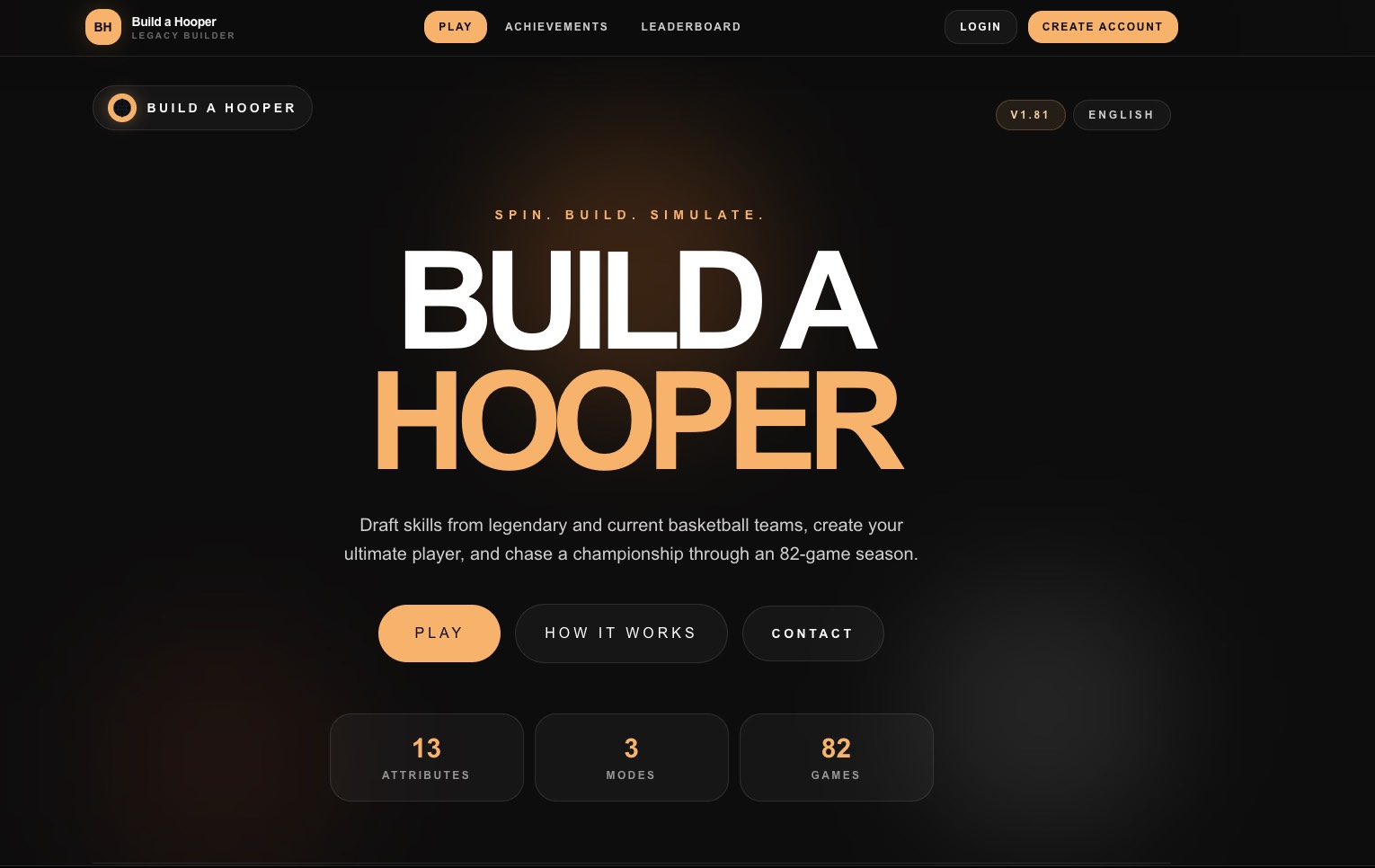
Build a Hooper
Build a Hooper lets you draft skills from historic and current teams, build a custom basketball star, and simulate a full 82‑game season to chase a championship right in your browser.
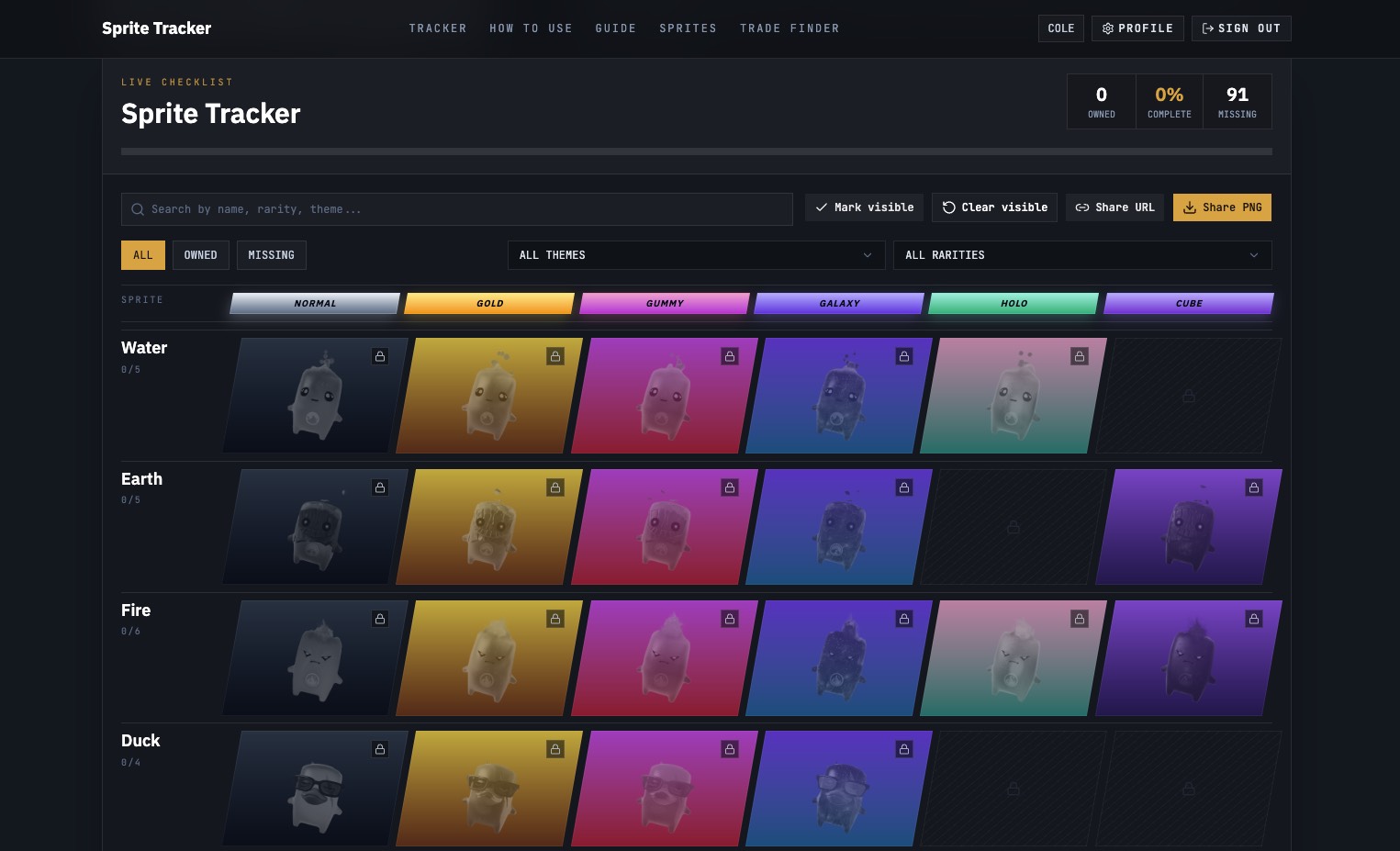
Fortnite Sprite Tracker
Fortnite Sprite Tracker lets collectors quickly mark owned Sprites, spot missing variants, filter by themes and rarities, and share a trade‑ready locker as a link or image.
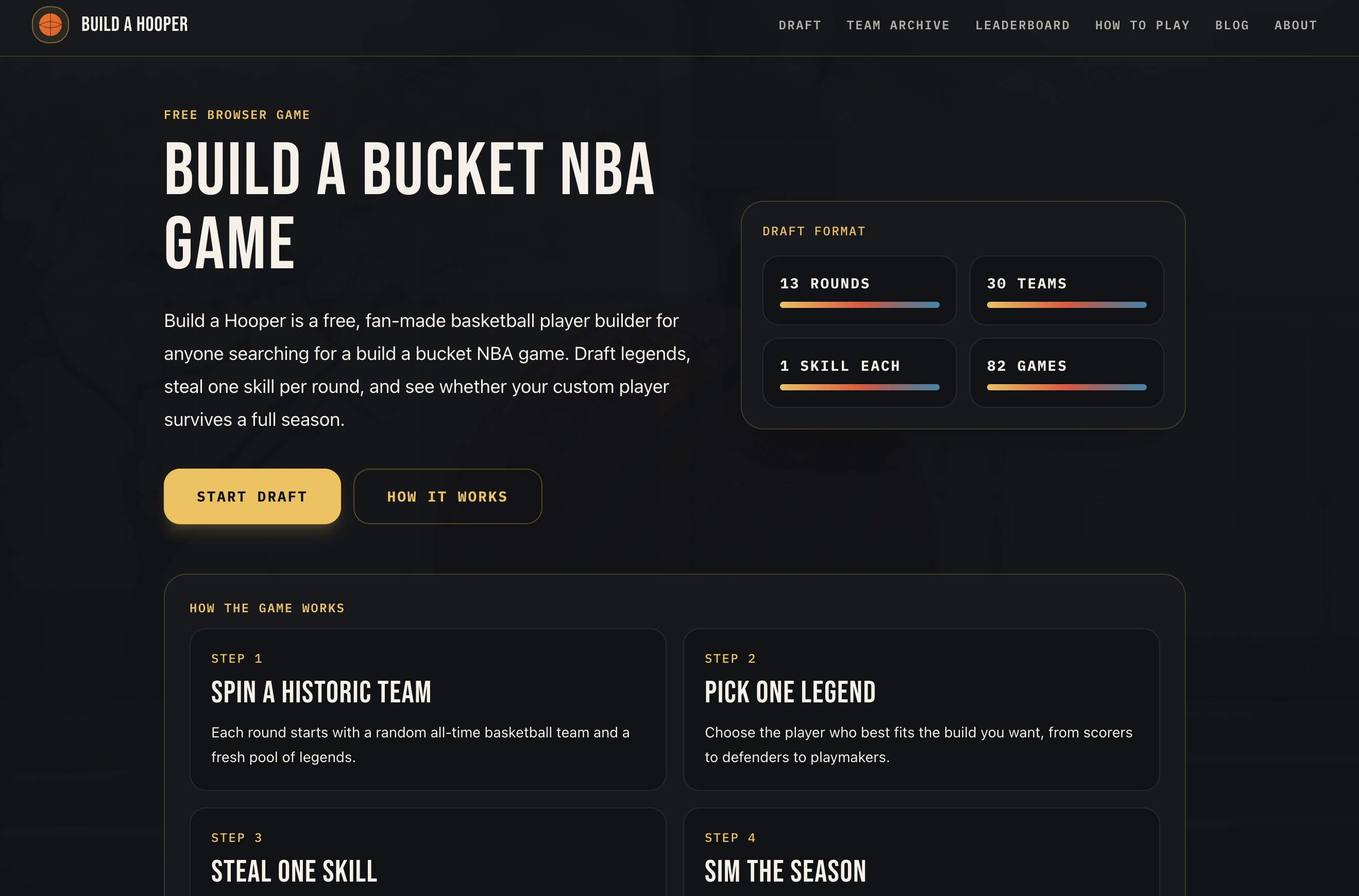
Build a Bucket NBA Game
Build a Bucket NBA game where you draft legends, steal one skill per round, and simulate a full 82-game season with your custom basketball player.